

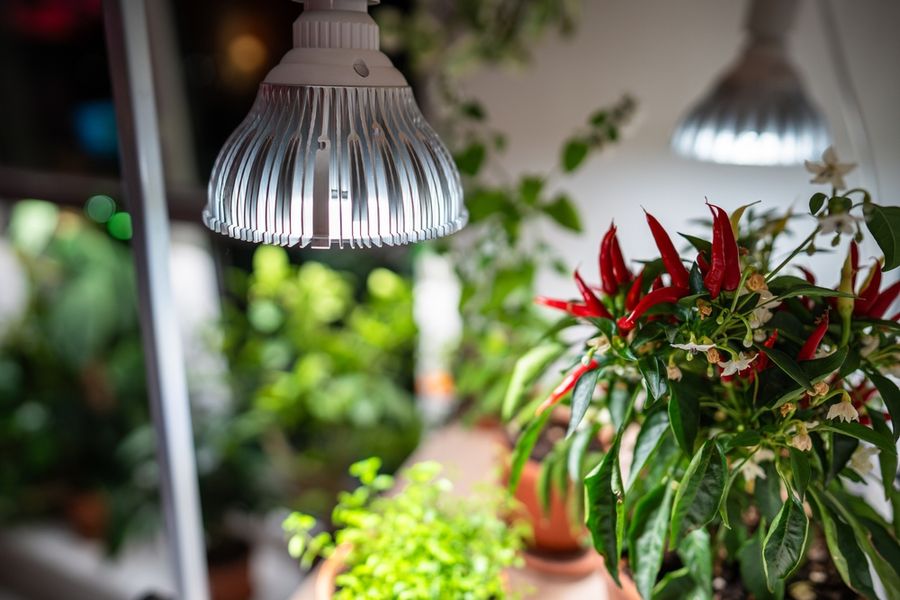
Rising grocery costs have pushed many households in the United States to look for ways to stretch food budgets without sacrificing quality. Growing food at home is one option, but outdoor gardening is not always possible year-round. LED grow lights make indoor growing more practical, even in small spaces. When used carefully, they can help offset grocery spending by supporting steady access to fresh herbs and vegetables while reducing waste and repeat purchases.
What LED Grow Lights Do Differently
LED grow lights are designed to give plants the type of light they need to grow indoors. Unlike regular bulbs, they focus on light ranges that support leaf growth, root strength, and overall plant health. They also use less electricity than older grow light types and produce less heat.
Lower heat output matters because it allows lights to be placed closer to plants without damage. This leads to more even growth and less wasted energy. Over time, efficient lighting helps keep indoor growing costs predictable, which is important when the goal is to reduce grocery spending rather than add new expenses.
LED grow lights also last a long time compared to many traditional bulbs. That reduces how often they need to be replaced and helps spread the cost of the equipment over many growing cycles.
Crops That Offer the Best Grocery Savings
Not all plants offer the same value when grown indoors. The biggest savings usually come from items that are bought often, spoil quickly, or cost more per serving. Fresh herbs are a common starting point. Basil, parsley, cilantro, and mint grow well under LED lights and can be harvested repeatedly.
Leafy greens are another strong option. Lettuce, spinach, and similar greens grow quickly and can be harvested in stages. This allows households to take only what is needed, which helps reduce food waste. Microgreens also grow fast and need little space, making them useful for frequent harvesting.
Fruit-bearing plants can be grown indoors but often take more time and space. For most households focused on grocery savings, fast-growing greens and herbs tend to provide the most reliable results.
Reducing Waste Through Fresh, On-Demand Harvesting
Food waste is a hidden cost in many grocery budgets. Fresh produce often spoils before it is fully used. Indoor growing changes that pattern. When herbs or greens are grown at home, they can be harvested right before use.
This reduces the need to throw away wilted or unused produce. Over time, using only what is needed helps stretch grocery dollars further. It also reduces the need for last-minute store trips to replace items that have gone bad.
LED grow lights support this approach by making it easier to keep plants healthy year-round. Consistent light leads to steady growth, which supports regular harvesting instead of large, single harvests that may go unused.
Electricity Use and Smart Light Management
Electricity use is an important part of the cost discussion. While LED grow lights are more efficient than older options, they still add to energy use. The key to offsetting grocery spending is managing light use carefully.
Many indoor plants do not need light around the clock. Using timers helps ensure lights are on only when needed. This keeps energy use controlled and predictable. Placing lights close to plants also improves efficiency, as less light is wasted.
Growing only what will be used is another smart step. Running multiple lights for plants that are rarely harvested can reduce savings. A focused setup with a small number of productive plants often provides better results than a large, unfocused system.
Space, Setup, and Long-Term Use
LED grow lights work in many spaces, from kitchen counters to shelves and spare rooms. This flexibility allows households to start small and expand only if it makes sense. A simple setup is often enough to support herbs and greens for regular meals.
The long-term value comes from repeated use. Once the lights are set up and routines are in place, each growing cycle builds on the last. Seeds are typically low-cost, and plants can often be grown back-to-back without long gaps.
Over time, the combination of steady harvests, reduced waste, and fewer grocery trips adds up. While the savings may not be dramatic in the first few weeks, they become more noticeable with consistent use.
A Practical Tool for Steady Savings
LED grow lights can help offset grocery spending when used with clear goals and simple planning. They work best for fast-growing herbs and greens that are used often and tend to spoil quickly.
By reducing waste, supporting on-demand harvesting, and keeping energy use controlled, indoor growing becomes more than a hobby. Over time, it can serve as a steady, practical way to reduce grocery costs while enjoying fresh food at home.